
Solar Integration for Ice Block Production: Energy Strategy for Cold-Chain Resilience.
A practical insight on energy-sensitive production, feasibility discipline, operating reliability and investment readiness for ice block and cold-chain businesses.
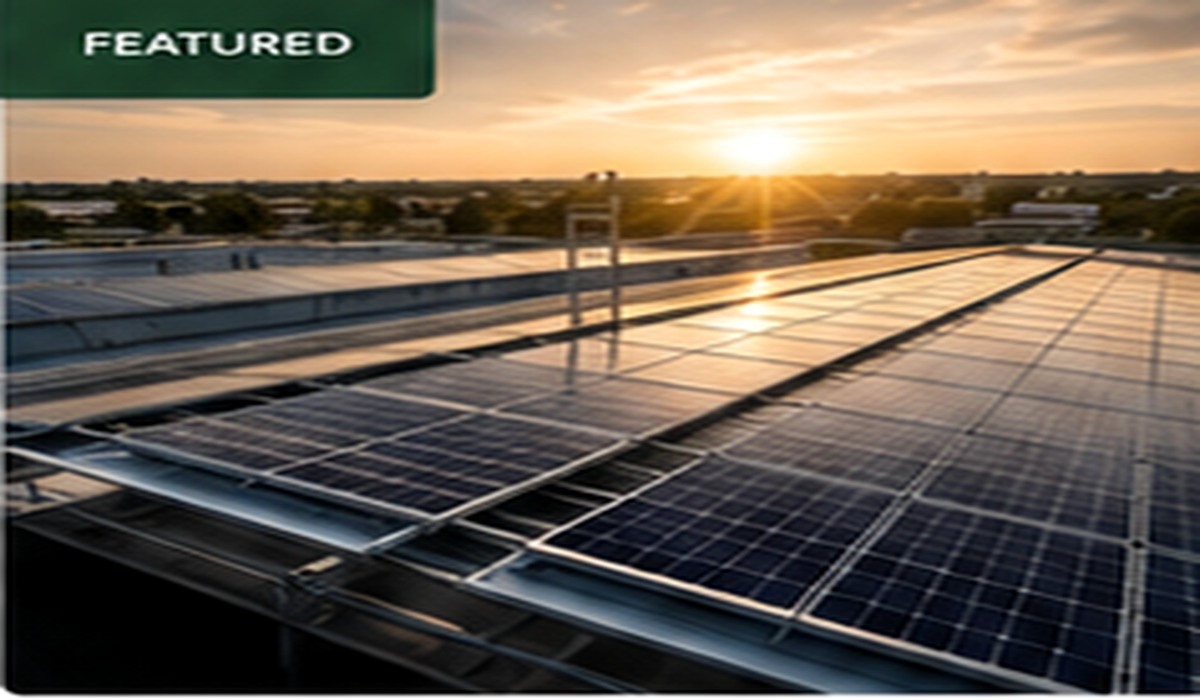
Ice block production is often viewed as a simple production business: secure water, install freezing equipment, produce ice blocks, and sell into a ready market.
In practice, the business is more complex.
Ice block production is not only a production activity. It is an energy-sensitive business where power cost, reliability, equipment sizing, operating hours, storage discipline and customer demand must be aligned carefully. Where energy supply is unstable or expensive, production capacity, pricing, profitability and customer reliability can all come under pressure.
This is why solar integration is becoming an important consideration for ice block production and related cold-chain operations.
The Strategic Problem
Many small and medium-scale production businesses face a common challenge: energy uncertainty.
For an ice block production operation, power interruptions do not merely create inconvenience. They affect production cycles, equipment performance, delivery reliability and revenue consistency. If freezing cycles are interrupted, production output may reduce. If backup power is expensive, margins may be compressed. If customers cannot rely on supply, the business may lose market confidence.
The strategic question is therefore not simply:
The better question is:
That question requires proper technical, commercial and financial review.
Why Solar Integration Matters
Solar energy can support ice block production in several ways.
First, it can reduce exposure to unstable power supply. For a business that depends on consistent production cycles, improved energy resilience can support better planning and output reliability.
Second, solar can help manage long-term energy cost exposure. Even where the upfront investment is significant, the business may benefit from reduced dependence on expensive backup power over time.
Third, solar integration can improve operational predictability. When power supply is more predictable, management can plan production schedules, customer supply, maintenance and storage more effectively.
However, solar is not automatically the right answer in every case.
A poorly sized solar system can become expensive decoration. A properly designed system must be based on the actual energy requirement of the business, the production target, equipment load, operating hours, backup power needs and cash flow capacity.
Key Issues That Must Be Assessed
1. Production Target
The business must define its expected production output clearly. Solar design cannot be separated from production planning. A facility producing at low utilization does not require the same energy strategy as one operating at higher daily output.
2. Energy Load
The actual load requirement of the freezing equipment, water systems, storage area, lighting and supporting operations must be assessed. Guesswork at this stage can lead to under-sizing or over-sizing.
3. Backup Strategy
Solar should be viewed as part of an energy mix. The business may still require grid power, battery storage, generator backup or a hybrid arrangement. The correct combination depends on reliability needs and financial feasibility.
4. Operating Hours
The production cycle matters. Ice block production may require energy at periods when solar generation is unavailable or reduced. This makes battery storage, load management and backup planning important.
5. Capital Cost
Solar integration requires upfront investment. The project must assess whether the business can absorb this cost directly, finance it, lease it, or structure it through another commercial arrangement.
6. Payback Logic
The economics should be tested. The business must compare the cost of solar integration against projected energy savings, improved uptime, production reliability and long-term operating benefits.
7. Maintenance and Technical Support
A solar system is not a one-time installation with no management requirement. Maintenance, monitoring, technical support and component replacement must be considered from the beginning.
Maralight’s Advisory Perspective
Maralight approaches this type of project from a business development, feasibility and investment-readiness perspective.
The goal is not to promote solar for its own sake. The goal is to determine whether solar integration improves the business case for ice block production.
This requires a structured review of:
- production assumptions
- energy requirements
- cost structure
- market demand
- pricing logic
- operating risks
- capital requirements
- payback expectations
- implementation structure
- long-term sustainability
The most important point is that the energy system must support the business model. If the solar design is technically attractive but commercially weak, the project may struggle. If the system is commercially sensible but poorly implemented, the expected benefits may not materialize.
A strong project must align both sides: technical design and business logic.
Commercial Logic
For ice block production, energy affects more than electricity bills.
It affects production output, customer reliability, equipment utilization, downtime, operating cost and ultimately profit margin.
A solar-integrated model can become more attractive where energy costs are high, power reliability is weak, demand is steady, and production planning is disciplined. But the project must still be tested under realistic assumptions.
The business should answer the following questions before implementation:
- Is there consistent market demand for the planned production volume?
- What is the current energy cost exposure?
- How many hours of power are required daily?
- What is the expected reduction in backup power usage?
- What battery or hybrid system is required?
- What is the projected payback period?
- What happens if demand is lower than expected?
- What happens if operating costs increase?
- What maintenance structure will support the system?
- Who will monitor performance after installation?
These questions help separate a serious project from a hopeful idea.
Key Insight
Solar integration can strengthen ice block production, but only when it is properly structured.
The project must not begin with equipment procurement. It should begin with feasibility, load assessment, market review, financial modelling and operating structure.
The right energy system should help the business produce more reliably, control cost exposure and improve customer confidence. The wrong system may increase capital burden without solving the real operating problem.
For Maralight, the lesson is clear:
For energy-sensitive production businesses, energy strategy can determine whether the business is competitive, resilient and investment-ready.
Conclusion
Solar integration for ice block production presents a practical opportunity for businesses operating in energy-constrained environments. However, the opportunity must be approached with discipline.
The business case should be tested. The numbers should be reviewed. The operating model should be clear. The technical design should match the production requirement. The financing approach should be realistic.
When properly structured, solar integration can support stronger production reliability, better cost control and improved long-term resilience.
Maralight’s role in this type of project is to help move the opportunity from idea to structure, and from structure to execution.
Discuss a Similar Project
Do you have a project, business opportunity or expansion plan that requires structure, feasibility review, investment readiness or execution support?
Share a few details with Maralight and we will review your enquiry.